
Table of contents
Table of contents- A supply chain stress test for pharma: what the Strait of Hormuz reveals about planning under pressure
- Why the Strait of Hormuz is a hidden vulnerability for pharma
- Key pain points for pharmaceutical supply chains
- From efficiency to resilience: a shift in mindset
- How Slimstock supports pharma supply chains under pressure
- Resources and further reading
Overview
Instability around the Strait of Hormuz exposes structural vulnerabilities across global pharma networks, impacting lead times, costs and medicine availability. Addressing this uncertainty requires a shift from efficiency‑led planning to more resilient, data‑driven supply chain decision‑making.
Geopolitics is an immediate concern for the pharmaceutical industry. Recently, instability in the Middle East and disruptions in the Strait of Hormuz have become real risks for pharma supply chains worldwide.
The Strait is a waterway where about 20% of the world’s traded oil and petroleum products pass through, but its importance goes far beyond energy. It’s a critical transit route for active pharmaceutical ingredients (APIs), chemical precursors, packaging materials and finished medicines moving between Asia, the Middle East, Europe and other regions. For pharmaceutical companies built around globalised, tightly optimised supply chains, any disruption in this corridor can quickly lead to shortages, cost increases and service-level failures.
For supply chain and operations teams in pharma, the issue is no longer whether geopolitical disruptions will have an effect, but how well organizations can handle them.
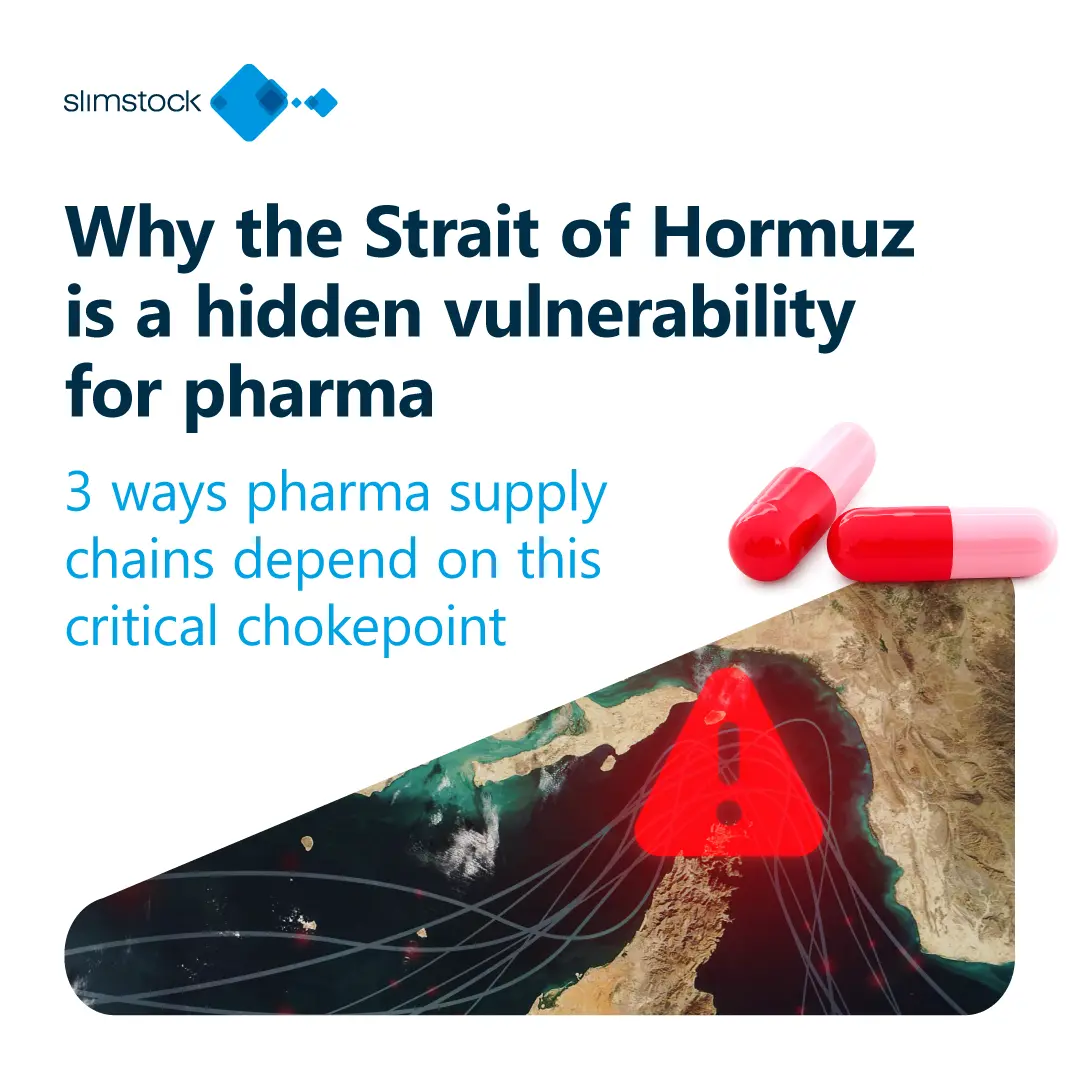
Why the Strait of Hormuz is a hidden vulnerability for pharma
Modern pharmaceutical supply chains are highly interconnected and depend on the Strait of Hormuz in three distinct ways:
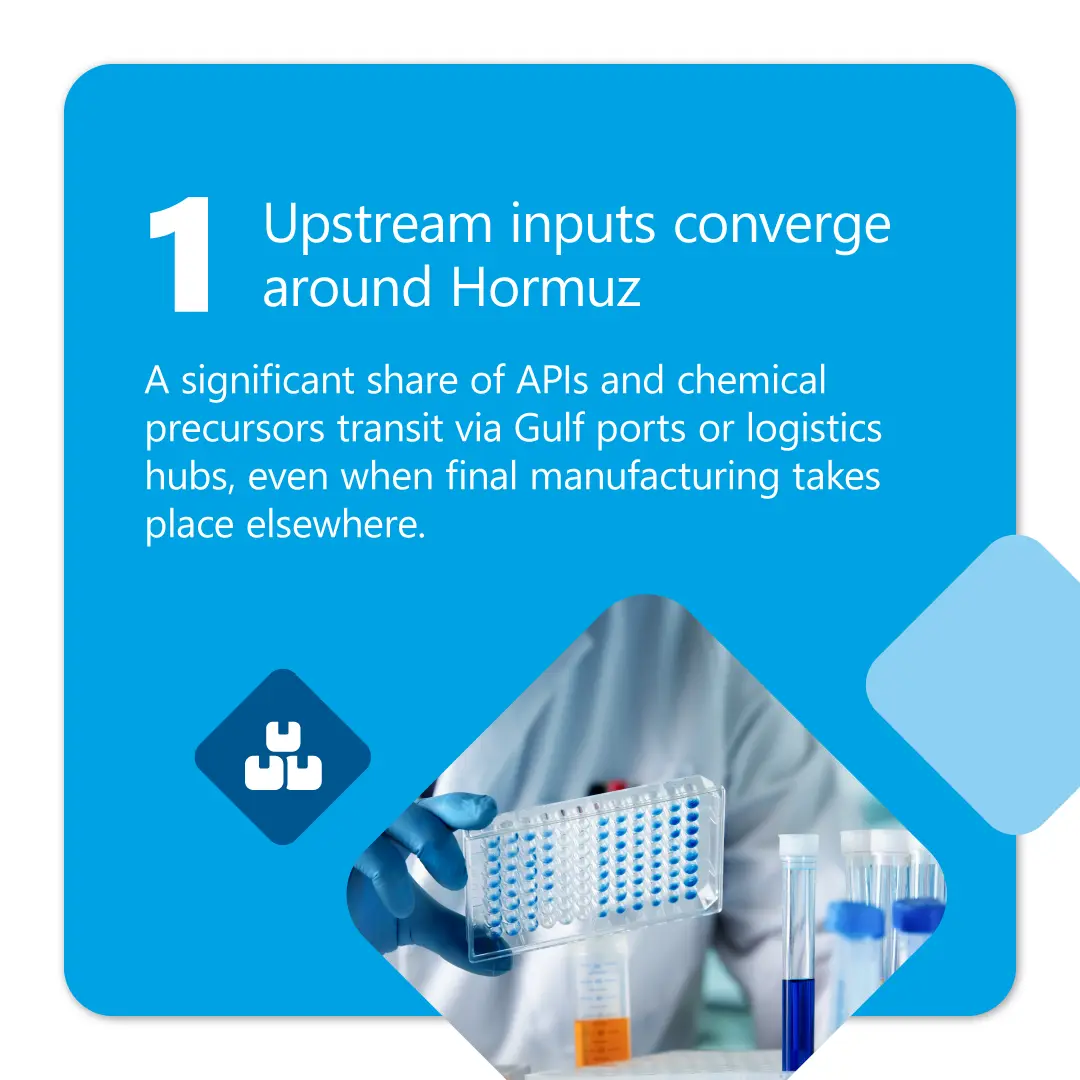
- First, many active pharmaceutical ingredients and chemical precursors transit through Gulf ports or logistics hubs before reaching manufacturing sites, even when final production occurs somewhere else. These inputs are sourced mainly from manufacturers in China and India, which together account for approximately 70% of global API production. As a result, upstream dependencies often converge in this region, creating concentration risk that is not always visible at a planning level.
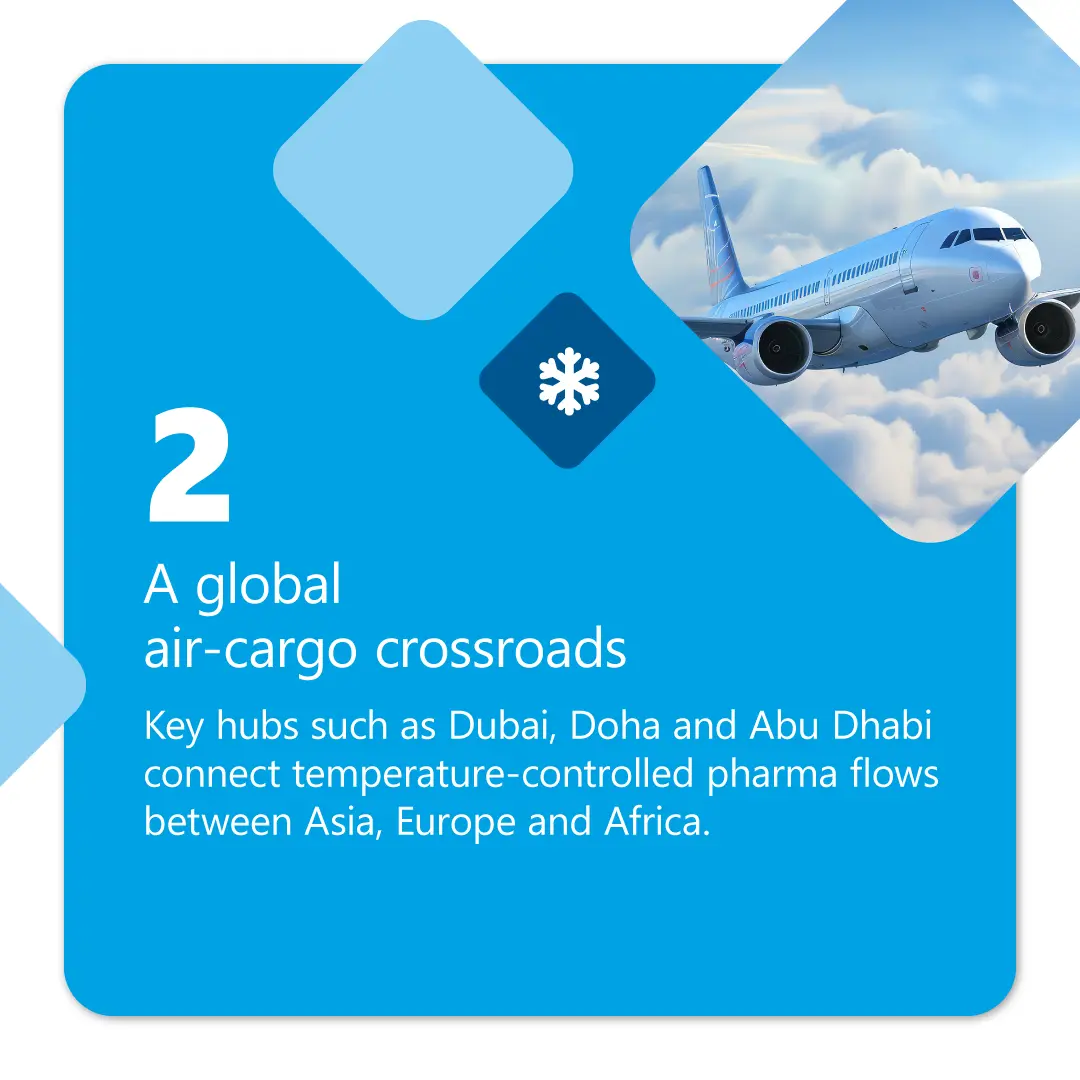
- Second, the Middle East functions as a global air‑cargo crossroads. Airports such as Dubai, Doha and Abu Dhabi are important connectors for temperature‑controlled pharmaceutical freight moving between Asia, Europe and Africa. This is where disruption becomes especially problematic for biologics, vaccines and other time‑critical therapies.
- Third, when energy prices fluctuate due to tensions around Hormuz, pharmaceutical production costs feel it almost immediately. Petrochemical inputs are everywhere in pharma, from manufacturing to packaging, so higher oil prices inevitably push up total landed costs.
This combination makes the Strait of Hormuz a high‑impact, multi‑layer risk point for pharma planning, and when shipping lanes are disrupted or rerouted, the impact is rarely contained:
- Longer lead times as vessels divert around risk zones.
- Higher transport and insurance costs, directly hitting margins.
- Reduced availability of cold-chain capacity, particularly for biologics and vaccines.
- Increased uncertainty in inbound supply of APIs and excipients.
Key pain points for pharmaceutical supply chains
For professionals working in pharma logistics, sourcing and planning, Hormuz-related disruption tends to surface through a familiar set of challenges.
1. Volatile lead times and planning uncertainty
What were once stable lead times for APIs, packaging or finished goods can suddenly become unpredictable. This volatility makes it harder to rely on historical data and increases the risk of planning errors.
2. Pressure on availability of critical medicines
Products with short shelf lives or strict temperature requirements are especially exposed. Delays can quickly lead to stock becoming unusable, amplifying the risk of shortages further downstream.
3. Rising costs across the supply chain
Higher freight rates, fuel surcharges and insurance premiums are felt at every stage. For pharma organisations already operating under pricing pressure, these increases are difficult to absorb without impacting service levels or profitability.
4. Inventory dilemmas: buffers vs. obsolescence
The instinctive response to disruption is to increase safety stock. But in pharma, higher buffers bring expiry risk, higher working capital requirements and potential compliance issues. Striking the right balance becomes significantly harder in times of geopolitical uncertainty.
5. Limited visibility across multi-tier supply networks
Many risks remain hidden in lower-tier suppliers. Without clear visibility into where materials originate and how they flow, organisations are often reacting rather than anticipating disruption.
From efficiency to resilience: a shift in mindset
The events unfolding around Hormuz echo the lessons of COVID-19 and the Red Sea disruptions of 2024, both of which exposed the fragility of efficiency-first supply chains under stress.
Historically, pharmaceutical supply chains were designed for efficiency: lean inventories, long global routes and cost-optimised sourcing. The situation in the Strait of Hormuz highlights the limitations of this approach.
Increasingly, resilience is becoming just as important as efficiency. That means:
- Diversifying suppliers and transport routes.
- Building smarter, targeted safety stocks rather than blanket buffers.
- Improving scenario planning around geopolitical and logistics risks.
- Using demand and supply data proactively, not retrospectively.
This is where data-driven supply chain planning becomes a strategic asset rather than a purely operational function.
How Slimstock supports pharma supply chains under pressure
Navigating disruption in routes such as the Strait of Hormuz requires more than firefighting. Pharmaceutical companies need planning capabilities that help them make informed trade-offs between availability, cost, service levels and compliance.
Slimstock supports pharmaceutical and healthcare organisations by helping them:
- Improve demand forecasting in volatile environments.
- Optimise safety stock levels, balancing service continuity with expiry risk.
- Increase visibility across the supply chain, enabling faster, better decisions.
- Run scenario planning to understand the impact of delays, shortages or cost increases before they materialise.
- Align supply planning with real-world constraints, including cold chain and regulatory requirements.
What the Strait of Hormuz shows is not a one‑off disruption, but a structural reality for pharmaceutical supply chains. Planning can no longer assume stability in the default and disruption is the exception. Instead, organisations need to move beyond efficiency‑led models to planning approaches that explicitly address uncertainty, trade‑offs and risk.
In this context, resilience is not about holding more stock everywhere, but about making better, earlier decisions with clearer visibility and stronger data foundations. The companies that adapt their planning mindset accordingly will be best placed to protect patient supply in an increasingly volatile world.
Resources and further reading
- Where the Iran War Could Disrupt Pharmaceutical Supply Chains
- Global Disruptions to the Pharma Supply Chain: Q&A with Jeff Golfman
- Global medicine supply chains face mounting pressure amid Strait of Hormuz disruptions
- Strait of Hormuz standoff puts supply of America’s generic drug prescriptions at risk