
Overview
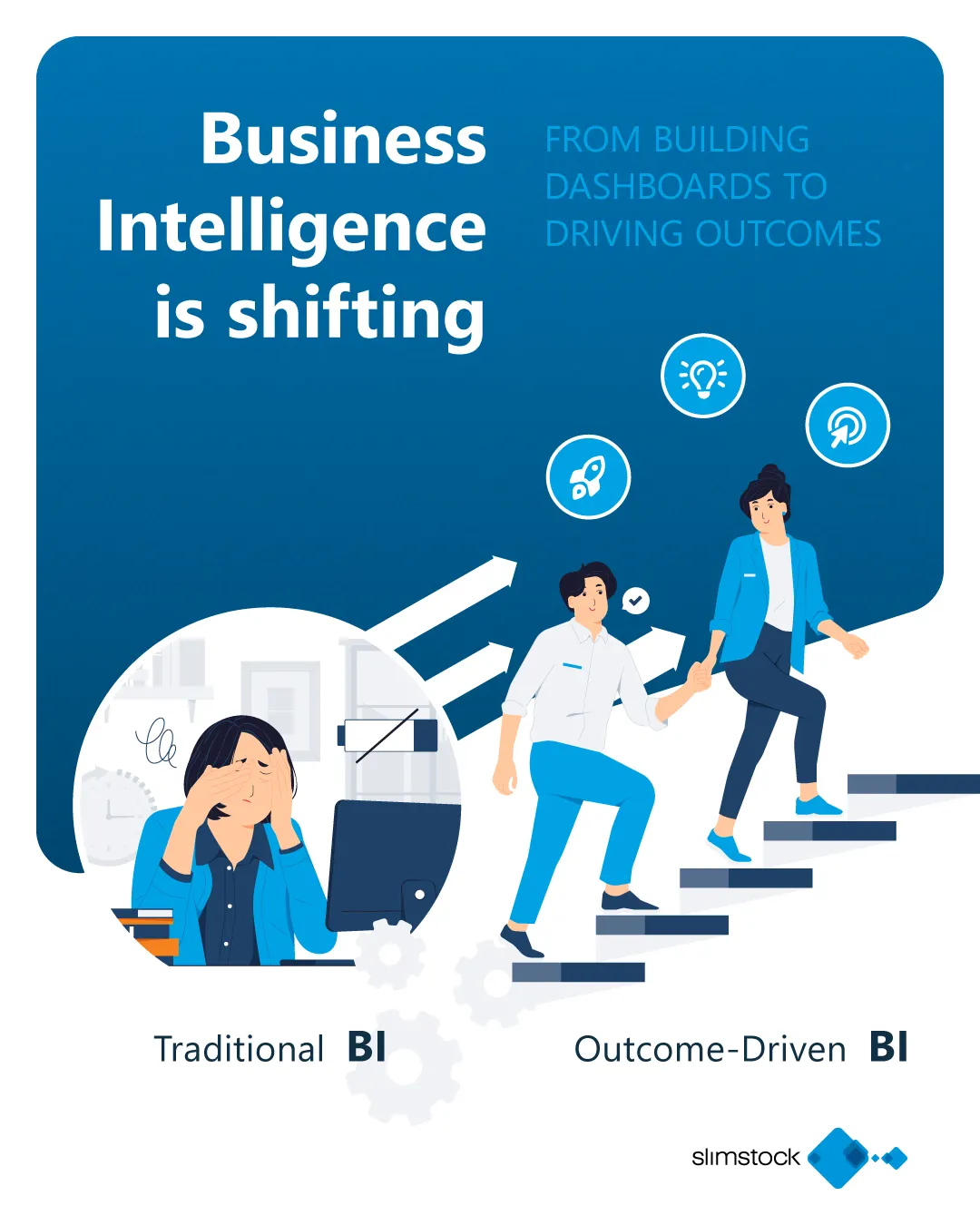
The world of Business Intelligence (BI) is rapidly shifting from a slow, traditional approach of building a full data structure first to a modern, outcome-driven and domain-based approach. This new method starts with a specific business question or desired impact, allowing cross-functional teams to quickly pull only the necessary data, leading to faster insights and decision-making.
With the fast rise of Artificial Intelligence (AI), the world of Business Intelligence (BI) is changing quickly. While AI grabs headlines, companies need a solid data foundation before they can take full advantage of it, and that starts with using BI effectively.
As businesses deal with more and more data, BI helps them turn it into insights they can act on faster. In this blog post, we’ll walk you through what’s changing and why it matters.
A new trend: from a traditional approach to an outcome-driven approach
Why the traditional approach falls short
Traditionally, BI starts with building the full data structure first. This includes creating semantic models (a modern word for datasets) and dashboards, but only after all data is cleaned and organised. This takes a lot of time before you even get your first insights.
But things are moving faster now. Companies don’t want to wait for months to see reports. They want to get value from data right away, and react quickly to changes.
A modern alternative: focusing on outcomes
That’s why more companies now use a domain-based, outcome-driven approach. Instead of building everything in one central system first, they now start with a simple business question: What do we want to achieve?
For example:
- How can we improve the availability of our top products (AA-items)?
- How can we reduce waste in our supply chain?
- Which customer groups have the most growth potential?
Teams from different areas of the business work together on these goals. They only use the data they really need for the question they are trying to answer. This makes it faster to find useful insights, and the data structure grows naturally with the needs of the business.
How outcome-driven BI changes the way teams work
In practice, an outcome-driven approach means teams don’t start with data, but they start with impact. Instead of waiting for a complete data model to be built and approved centrally, cross-functional teams quickly align on a specific business outcome they want to achieve. They then work in short cycles, pulling in only the data they need to support that goal. This leads to faster insights, enabling quicker decision-making.
For business users, it means they are more directly involved in designing the reports. They are no longer just consumers of reports, but active participants in getting the right insights. For data teams, it means less time spent on maintaining large, unused datasets, and more time delivering real value to the business.
The result: BI becomes a strategic tool, not just a technical one
More focus on data governance and a central data platform.
Data governance gets more attention
The future depends on your data. To get value, your data structure must be in good shape because the landscape keeps changing. Garbage in, garbage out. That’s why companies are now paying more attention to data governance.
This simply means: clear rules and agreements about who works with the data, how they use it, and which tools and processes are involved.
One platform, one source of truth
Many companies are also building a central data platform to create a single source of truth. Instead of having many Excel files or systems that don’t talk to each other, all data is brought together in one place. This makes it easier to combine information and find insights quickly. Setting up a central data platform may sound like a big task, but you can start small. Focus on your top priorities and make sure the right people are responsible for the right data.
Companies that take these steps are better prepared for the future, as they are able to react faster, make smarter decisions, and get more value from their data, ready to leverage AI as it evolves.
Would you like to know more about how the Slim4 BI functionality can help your organization move forward? Or how Chain Analytics can support your organization in improving data governance maturity and setting up a central data platform? Let’s talk about how we can help you get faster insights.