Andy Will
Executive Director | B&R Enclosures
"Slimstock has helped us to develop that culture of understanding the root cause."
B&R Enclosures improved stock control and customer service by replacing spreadsheet-based planning with a structured, data-driven approach. With Slimstock’s solution in place, the business improved customer fill rates from around 80% to more than 90%, reduced stock investment by 5–7.5% and released an estimated $1.15M–$1.7M in working capital.
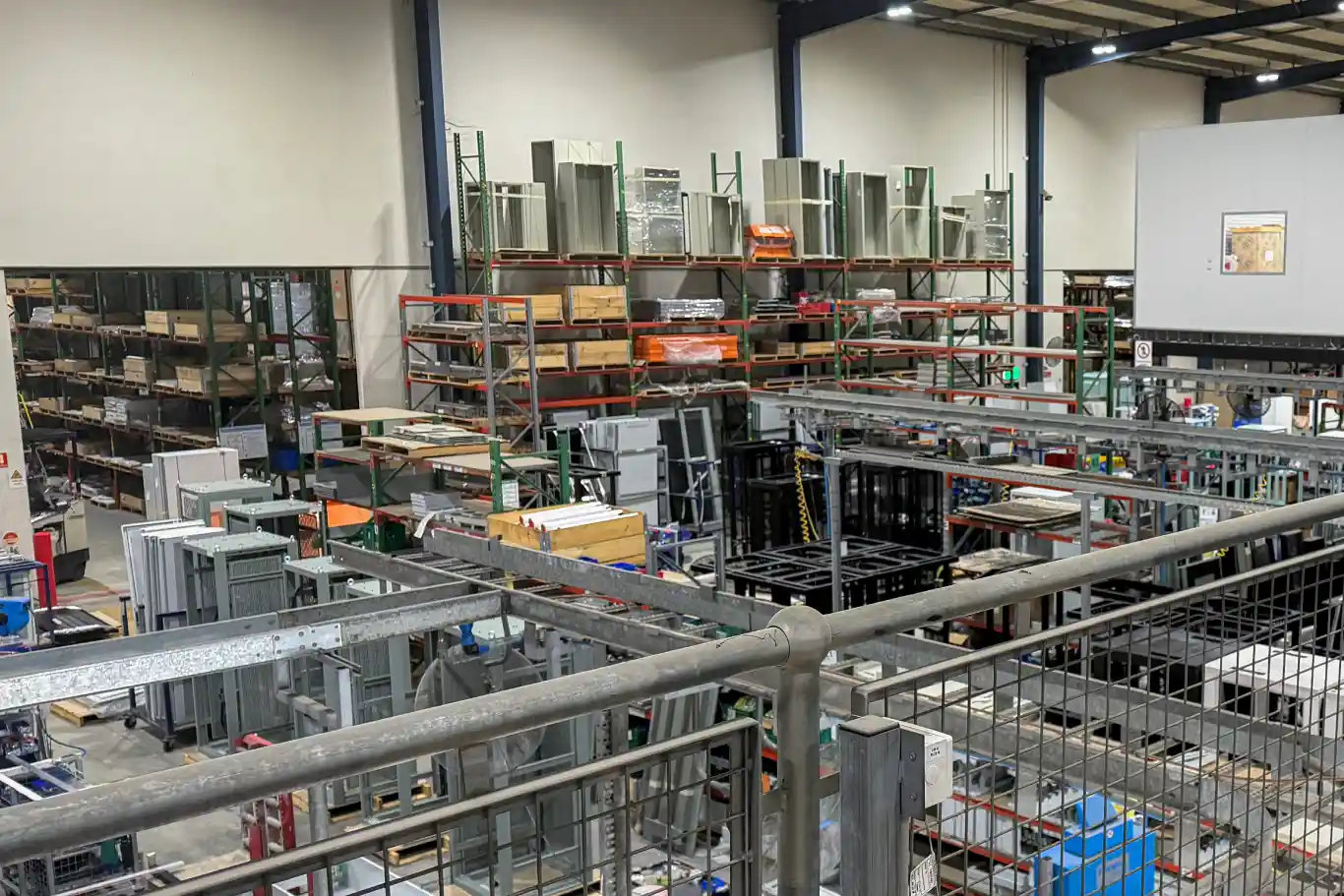
Established in 1955, B&R Enclosures is an independently owned company based in Australia that manufactures enclosures and electromechanical assemblies. The company has been in existence for more than 70 years and operates in Australia and New Zealand with 30,000 active articles in seven warehouses.
Before implementing Slimstock’s solution, B&R Enclosures measured performance at a high level. However, the team did not have visibility into what factors influenced their stock and service performance results. Significant capital was tied up in inventory, but even with that heavy financial investment, the company still faced issues with excessive supply, stockouts, and a lack of understanding regarding the root causes.
In addition, B&R Enclosures used about 15 spreadsheets to manage its inventory. All transactions were analysed externally by the team using the spreadsheets. As Andy Will, Executive Director of B&R Enclosures says: “A lot of our transactional activity was all managed through spreadsheets.” This fragmented structure reduced visibility and affected the consistency of planning.
There were both commercial and operational problems as well. The buffer stock was determined by instinct; slow and low-margin product lines took too much capital, and the fast-moving products were sometimes out of stock. As far as the enclosures range, the company had a fill rate of 80%.
However, B&R Enclosures was looking for ways to cut down on inventory costs without compromising the customer experience. To achieve this, B&R Enclosures required a more accurate way to estimate their needs, to establish appropriate stock levels, and to plan accordingly.
Moving from Excel sheets to a structured process
To address these challenges, B&R Enclosures chose to implement Slimstock’s suite. The project did not just focus on improving forecasting and inventory optimisation. It also involved a change in the way planners were working on a day-to-day basis. B&R Enclosures integrated Slimstock’s solution with its ERP system, embraced exception planning, and moved away from spreadsheets to an efficient centralised planning environment.
Thanks to Slimstock’s solution, planners were no longer spending time sifting through large volumes of data. They were able to concentrate on exceptions that needed their attention and apply recommendations provided by the software to place orders and perform transfers.
This project contributed to the establishment of new culture in the company. Planners stopped switching from one problem to another. Using the analysis of lead times, service levels, and constraints, they started making more informed decisions. As Andy Will put it: “Slimstock has helped us to develop that culture of understanding the root cause.”
The following positive changes became possible thanks to Slimstock’s suite:
- Customer fill rates improved from 80% across the enclosures range.
- Stock investment was reduced by 5–7.5%
- Emergency freight and expediting costs were significantly reduced.
- Forecasting became more structured, combining statistical forecasts with sales insight.
- Spreadsheet reliance was cut from around 15 files to near zero.
Working capital savings through lower inventory levels and more efficient planning
First and foremost, the solution delivered bottom-line savings. By reducing inventory levels while maintaining high service levels, B&R Enclosures released vital working capital and gave planners a stronger foundation for decision-making.
First and foremost, the solution delivered bottom-line savings. Reducing inventory levels released vital working capital while maintaining high service levels, providing planners with a sounder foundation for decision-making.
Cutting down inventory levels by 5 to 7.5 percent led to the release of significant working capital – working capital which could now be deployed to support growth rather than sit idle in the warehouse. As Andy Will puts it: “We would have quickly trimmed between seven and a half percent from our finished goods inventory while maintaining our customer experience levels.”
At the same time, service got better. The fill rate for customers in the enclosure range rose from about 80 percent to above 90 percent, while premium freight and expediting costs were reduced. B&R Enclosures showed that working capital and service can be considered two separate concerns.
The operational benefits were equally evident. With 15 different spreadsheets used before the project, B&R Enclosures reduced their usage to nearly zero, thereby providing planners with a single source of information for daily planning decisions.
Related case study