29 September 2026
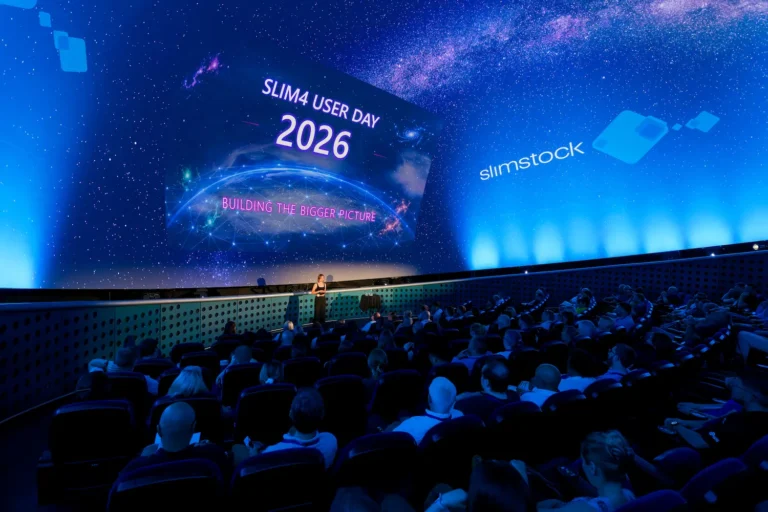
And it’s a wrap. The IBP Summit 2026 is over, but the conversations and lessons learned will linger for a while!
This year, we chose “The New Language of Planning” as our main theme. A title that reflects not only the rise of LLMs and the ability to make faster decisions through natural language-driven analytics, but also the need for companies to think more carefully about the shared language that must exist between finance, supply chain, sales and operations. A daunting task, given that each department has different goals, KPIs and behaviours, but one that is absolutely necessary if we want to succeed.
From AI-powered data to faster decisions
The theme was reflected through a variety of sessions. We kicked off the day with a review of agentic master data management by Ludovic Magne of Slimstock. He talked about how AI agents can help organisations clean, correct and manage master data, which can then used for other agents to help with forecasting and other planning tasks.
Next up was Melissa Howatson of Vena Solutions, who showed us how companies should be focussing on making better, faster decisions: we need to reduce decision latency, something AI is particularly well suited to support.
Next was an excellent panel moderated by Shannon Macey of Supply Chain Alliance, titled AI in Supply Chains: Separate the Wheat from the Chaff. A panel of experts shared their vision on AI ROI, how to build a business case and how to keep it real. Thanks to Corey Weekes, Pieter Laleman and Amy Charette for sharing their experiences.
The human side of planning
After a networking and lunch break, we continued with Jan Kraaijeveld, whose session, The Unspoken Power of S&OP, focused on a key message: in order to succeed in S&OP, we have to stop treating it like a poker game. We need to have open, constructive meetings and behaviour, otherwise we’ll never be able to plan well. He suggested that companies should not only implement Key Performance Indicators (KPIs), but also consider Key Behavioural Indicators (KBIs). In other words, how are people expected to interact, collaborate and contribute to the planning process?
In a session with Nestlé Health Science, we talked with Maryam Karimi and Akash Darar about building the foundations of an S&OP process. The discussion highlighted how automation enables planners to think more strategically, while also emphasising the importance of implementing a strong accountability framework to achieve long-term success.
Connecting finance and supply chain
In the last session Steve Sussman of Column5 Consulting introduced the xP&A framework to us. An extended planning framework where FP&A and S&OP decisions come together through a unified data framework. This is where you can see and review the impact on planning related to labor, DC operations, etc.
Looking ahead
With events like these, we always strive to offer something new to supply chain professionals. This year, by including more finance professionals and speakers, we achieved exactly that. One participant highlighted how greater exposure to this kind of systems thinking is beneficial for everyone in the supply chain community.
Next year, we’ll continue to expand opportunities for knowledge sharing and networking, while encouraging even greater cross-functional collaboration within organisations.
See you next year!