
Table of contents
Table of contents- Supply chain visibility: the hidden lesson behind the Australia-US critical minerals deal
- Why this matters for Australia?
- The visibility challenge facing Australian businesses
- The cost of poor supply chain visibility
- Turning supply chain data into better decisions
- Critical minerals are a warning sign for every Australian supply chain
- Building a more resilient supply chain
Overview
The agreement between Australia and the United States on critical minerals hows that end-to-end visibility is key to strengthening supply chain resilience. Reliance on complex, global networks requires anticipating risks beyond immediate suppliers. These lessons apply to all Australian sectors: competitive advantage increasingly depends on identifying risks, adapting plans and maintaining service levels during disruptions.
When Australia and the United States announced an initiative to strengthen critical minerals and rare earth supply chains, the headlines focused on mining, energy security and geopolitics.
However, for Australian supply chain leaders the announcement highlights a much broader issue: visibility across increasingly complex supply networks.
Australia plays an important role in global supply chains, supplying raw materials across industries, including clean energy, advanced manufacturing, technology and defence. Australian businesses also remain highly exposed to global disruptions, lengthy import supply chains, freight constraints and geopolitical uncertainty.
The lesson is clear: building supply chain resilience requires organisations to look well beyond their immediate suppliers and gain better visibility into the networks that support them.

Why this matters for Australia?
Australia’s economy relies on both imports and exports. Manufacturers depend on raw materials, components and finished goods sourced from around the world, while sectors such as mining, agriculture, retail, healthcare and construction rely on complex transportation and distribution networks to meet demand.
Recent years have shown how vulnerable these networks can be. Global shipping disruptions, port congestion, extreme weather events, labour shortages and geopolitical tensions have all affected the flow of goods into and out of Australia.
Critical minerals provide a clear example of these challenges.
As global demand for battery technology, electric vehicles, renewable energy infrastructure and advanced electronics keeps growing, access to reliable supplies of lithium, rare earth elements and other strategic materials has become increasingly important. While Australia is rich in many of these resources, the broader supply chain still depends on processing capacity, transportation infrastructure and international trade relationships.
Any disruption along that chain can create far-reaching consequences for manufacturers, distributors and end customers.
The visibility challenge facing Australian businesses
Most organisations have reasonable visibility of their immediate suppliers, but many struggle to understand what happens beyond the first tier of their supply network.
For example, an Australian manufacturer may know where a particular component is sourced, but may have limited visibility into where the minerals used in that component originate, which countries process them, how they are transported or what alternative sources are available if disruption occurs.
Another example; retailers and wholesalers may understand inventory levels within their own network but struggle to identify emerging risks several tiers upstream.
This lack of visibility can make organisations vulnerable to sudden disruptions and reduce their ability to respond quickly when circumstances change.
The Australia-US agreement aims to diversify and strengthen critical mineral supplies through investment, financing and closer cooperation. While the initiative focuses on strategic resources, it reflects a broader trend businesses across sectors face: greater pressure to reduce supply chain risk.
The cost of poor supply chain visibility
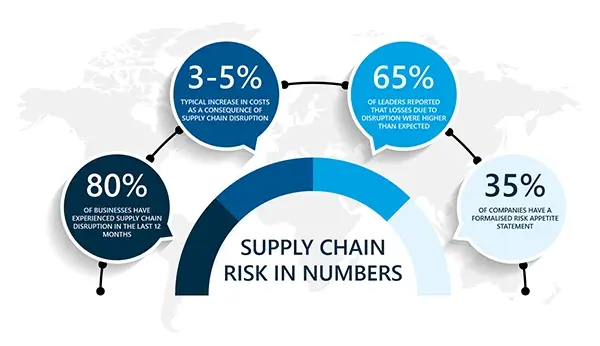
When organisations lack visibility into their wider supply network, they often discover problems too late.
These are some of the most common consequences:
- Material shortages that affect production schedules.
- Unexpected supplier delays and extended lead times.
- Increased procurement and logistics costs.
- Higher inventory holdings used as a protective buffer.
- Reduced product availability and customer service performance.
- Greater difficulty balancing working capital with service objectives.
These challenges usually result from a lack of timely information and limited understanding of upstream dependencies.
For Australian businesses operating across large geographic distances and serving dispersed customer bases, these challenges can be particularly significant.
That’s why leading organisations are investing in greater supply chain visibility, stronger supplier collaboration and better planning processes.
Turning supply chain data into better decisions
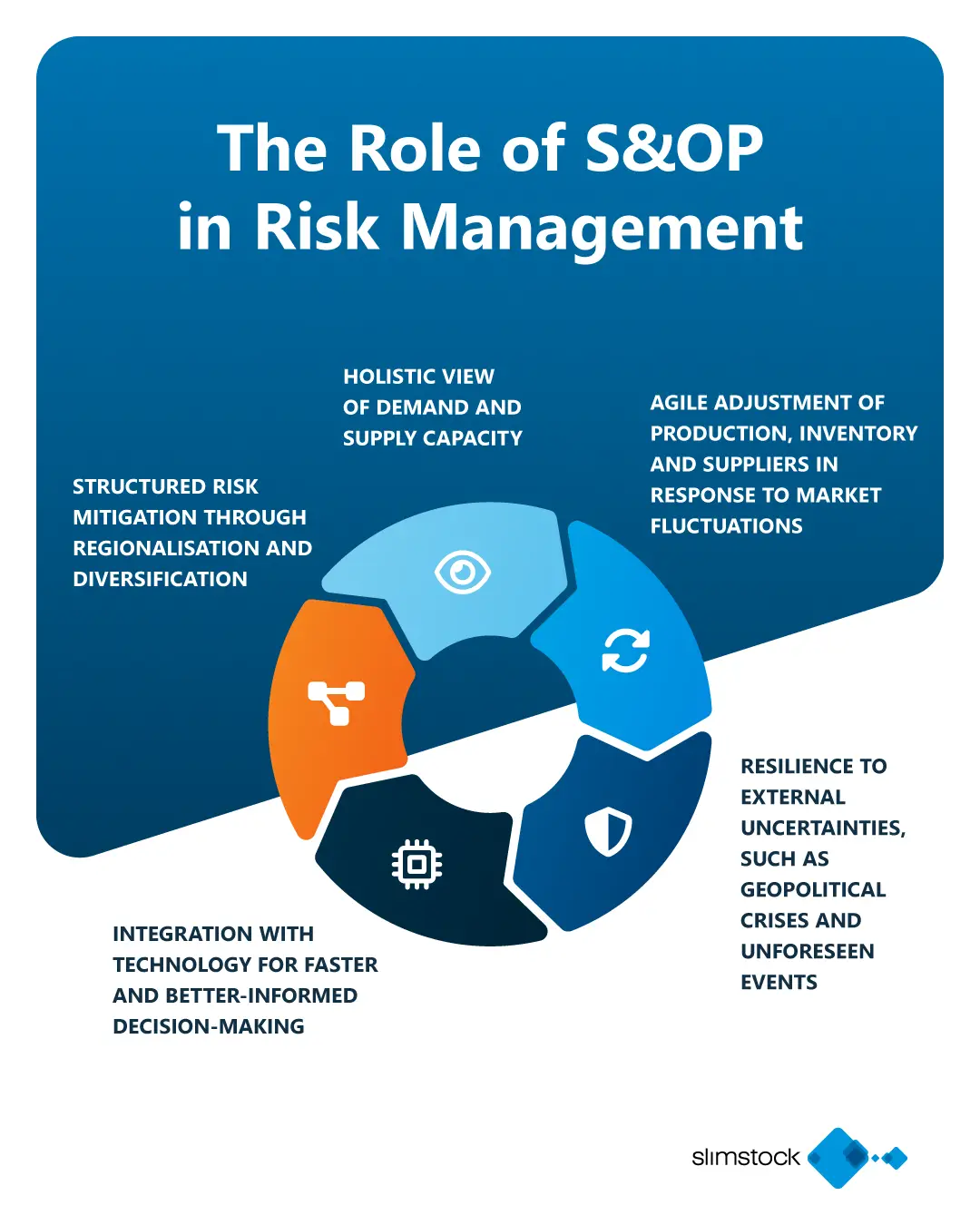
While organisations cannot prevent every disruption, they can improve their ability to identify risks earlier and respond more effectively.
Modern supply chain planning solutions give organisations greater visibility into demand, inventory, suppliers and supply risks. They allow planners to model different scenarios, assess the impact of potential disruptions and make informed decisions before customer service is affected.
For Australian supply chain teams, this can help answer critical questions such as:
- Which products are most exposed to supply shortages?
- Which suppliers represent the highest risk?
- What inventory policies best balance service and investment?
- Which customers or markets should be prioritised during periods of constraint?
- What alternative sourcing or replenishment strategies are available?
By leveraging better data and planning capabilities, organisations can move from reactive firefighting towards proactive risk management.
Critical minerals are a warning sign for every Australian supply chain
Critical minerals may seem like a mining industry issue, but the underlying lesson applies to every sector of the Australian economy.
Whether operating in manufacturing, retail, wholesale distribution, healthcare, consumer goods or agriculture, businesses are becoming increasingly interconnected with global supply networks. A disruption on the other side of the world can quickly affect inventory availability, transportation capacity, operating costs and customer service outcomes in Australia.
As a result, competitive advantage is no longer defined solely by the lowest costs; it also depends on how quickly organisations can identify risks, adapt plans and maintain service levels as conditions change.
Building a more resilient supply chain
The lesson from the Australia-US partnership is clear: Australia’s growing role in critical minerals supply chains reinforces the importance of supply chain resilience across the broader economy.
For today’s supply chain leaders, resilience isn’t built only through additional inventory or supplier negotiations; it also requires end-to-end visibility, stronger collaboration across trading partners, and the ability to turn supply chain data into faster, more informed decisions.
Because the next disruption affecting Australian businesses may not begin at a distribution centre, warehouse or manufacturing facility, it may start much further upstream, in a supply network that leaders cannot yet fully see.